The BYOD Device Records screen displays all authenticated online BYOD devices as well as all BYOD devices that were previously on the network and are stored in UPAM. To access the BYOD Device Records screen, click on Network > Access Records > BYOD Devices under the “Monitor” section of the OmniVista Cirrus Menu.
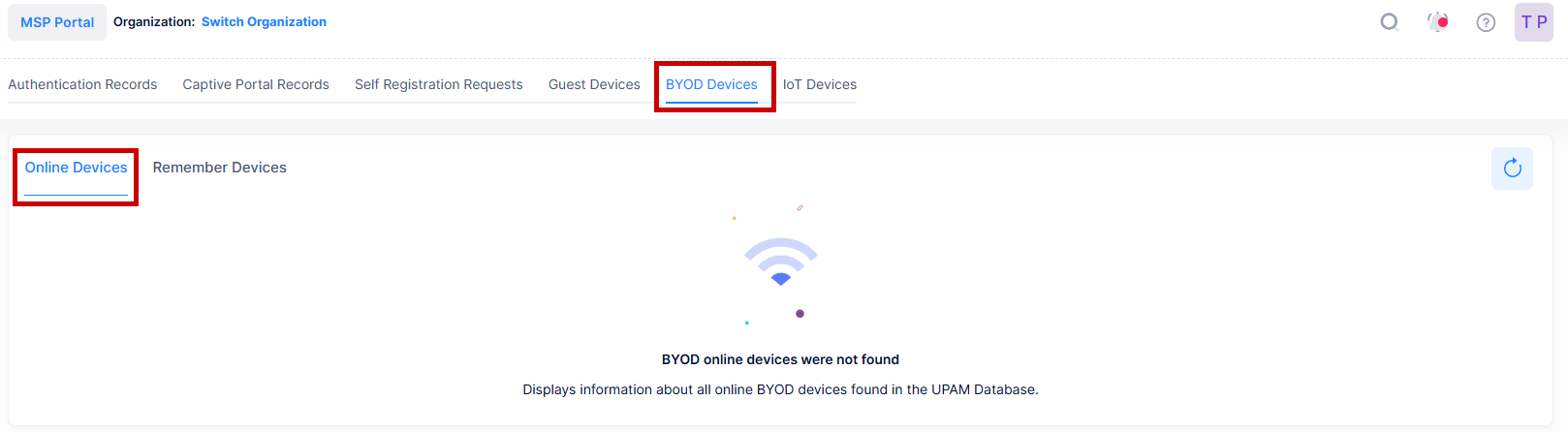
By default, the list of online BYOD devices under the BYOD Access Strategy displays all authenticated devices. You can view your own online devices.
BYOD Remembered Devices
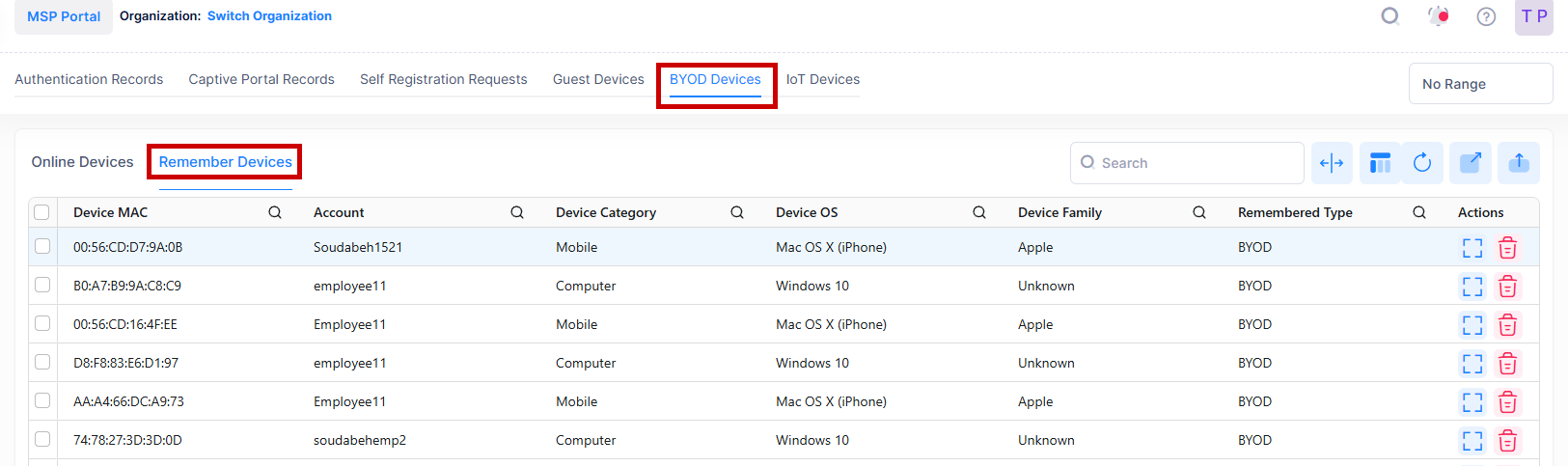
Click on the Remembered Devices tab to see all BYOD devices that were previously on the network and are stored in UPAM. You can also select a specific time window range from the date range filter the BYOD Remembered Devices by starting time. For example:
BYOD Devices List
The BYOD Devices List displays information for all BYOD devices. Click on the Additional Information icon under the “Actions' column next to a list entry to display detailed information for a specific BYOD device.

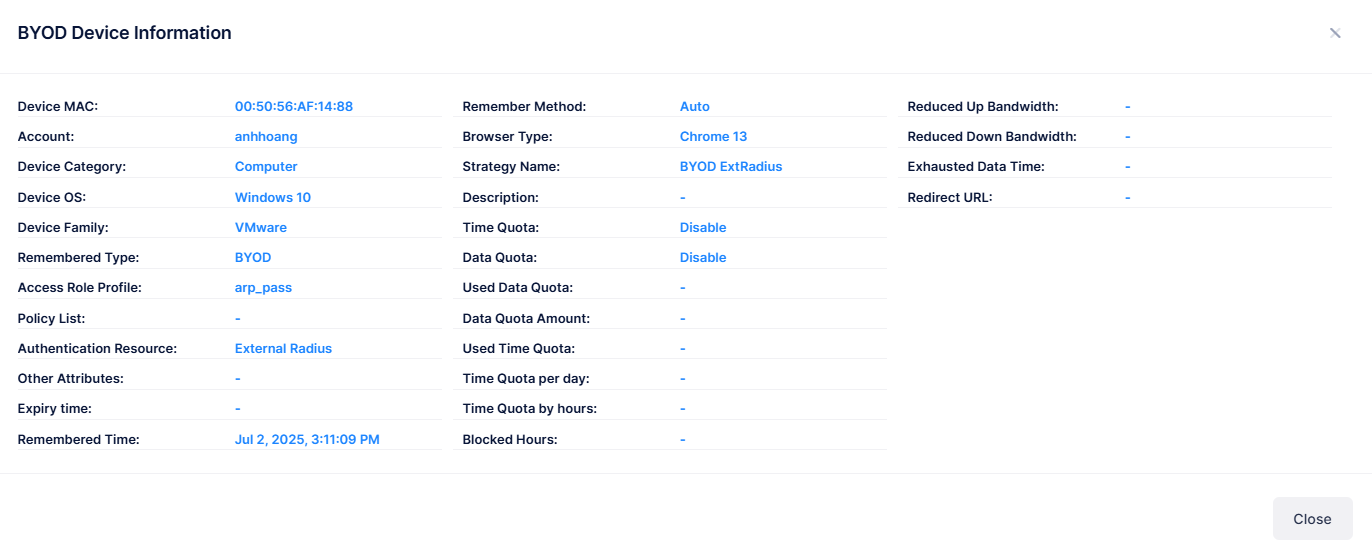
The BYOD Device Records field values provide the following information:
-
Device MAC - The MAC address of the all authenticated BYOD devices.
-
Account - User name of the Employee account. For MAC authentication, Account Name will be Device MAC.
-
Device Category - Category of the BYOD device:
-
Computer
-
Mobile
-
Tablet
-
Game console
-
Digital media receiver
-
Others
-
-
Device Family - Production vendor of the BYOD device:
-
Alcatel-Lucent Enterprise
-
Apple
-
Samsung
-
Huawei
-
Microsoft
-
LG
-
Lenovo
-
HP
-
IBM
-
Nokia
-
MI
-
HTC
-
Sony
-
Blackberry
-
Others
-
-
Device OS - The OS running on the BYOD device.
-
Linux
-
Windows
-
MacOS
-
Android
-
IOS
-
Others
-
-
Access Role Profile - Access Role Profile applied on the BYOD device.
-
Remembered Type - Indicates whether the online device was stored by UPAM and added into the BYOD remembered list. A remembered item can be utilized for MAC authentication.
-
Policy List - The policy list of the BYOD device.
-
Authentication Resource - Specifies the user profile database used in the authentication. (None, Local Database, LDAP/AD and external RADIUS server).
-
Session Interim Interval - Number of seconds between each interim update for this specific session.
-
Session Time - It specifies the maximum number of seconds of service provided prior to session termination.
-
Up Stream Bandwidth - The maximum rate at which the data is sent.
-
Down Stream Bandwidth - The maximum rate at which the data is received.
-
Tunnel Private Group ID - Used to support the VLAN assignment from RADIUS (ID=VLAN ID).
-
Expiry Time - Indicate the expiry time of the BYOD device. When it is expired, the BYOD device will be deleted from the remembered list in UPAM.
-
Remembered Time - The time and date on which the BYOD device was remembered by UPAM.
-
Web Access Strategy - The Access Strategy used for the device. One device can login through multiple BYOD Access Strategies.
-
Remember method - It indicates whether the device was manually added to the list (Static) or automatically added through Captive Portal Authentication (Auto).
-
Browser Type - Browser of the BYOD device.
-
Redirect URL - Redirect URL returned to the BYOD device by UPAM.
-
Time Quota - Enable or disable a time quota for user traffic.
-
Data Quota - Specify the user traffic quota, in MB, for the Service Level.
-
Used Data Quota - Specify the traffic quota in MB, consumed by the user.
-
Data Quota Amount - Specify the user traffic quota, in MB, for the BYOD Access Strategy.
-
Used Time Quota - Specify the number of hours consumed by the user.
-
Time Quota per day - Specify the number of hours each day that the time quota is applied to user traffic. The quota is reset at the beginning of each day.
-
Time Quota by hours - Specify the number of hours that user traffic is allowed.
-
Blocked hours - Specify the number of hours to block user traffic once the number of hours allowed is reached. After the number of hours to block is reached, the number of hours to allow user traffic starts up again.
-
Reduced Up Bandwidth - Bandwidth Up is set for the Access device. It will be set for the accessing device when the device reaches the Data/Time quota limitation. The unit is kbit/s.
-
Reduced Down Bandwidth - This is set in the registration configuration file. The Bandwidth will be set for the accessing device when the device reaches the Data/Time quota limitation. The unit is kbit/s.
-
Exhausted Data Time - It indicates the end time of the 'Block for' on the device, 'the Block for' field is set in Registration Profile, once the device reaches the 'Allow access for', it will be blocked for the number of hours specified in the 'Block for' field.
Search by an Attribute Value
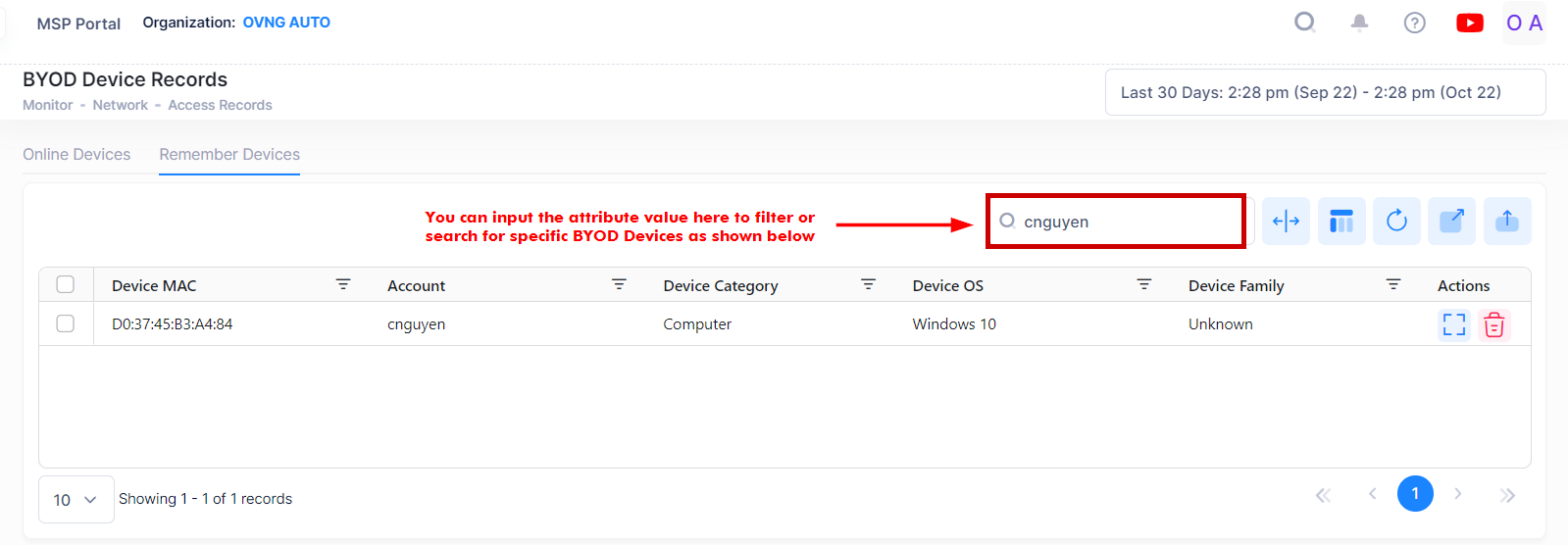
You can search for BYOD Remembered devices by using the Search box option. The search results are refined based on the attribute value selected from the available list (Device MAC/Account). Only those records that contain the matching searched values are displayed in the results.