
The Unified Access Period Policy screen displays all configured Period Policies and is used to create, edit, and delete Period Policies and manage device configuration on the network. A Period Policy specifies the days and times during which a device can access the network. The policy is associated with an Access Role Profile and applied to devices classified into the Access Role Profile.
To create a Period Policy, navigate to the Period Policy screen by clicking on Auth & Automation > Access Policies > Policy > Period Policies under the “Configure” section of the OmniVista Cirrus Menu. The Period Policies Information screen displays.
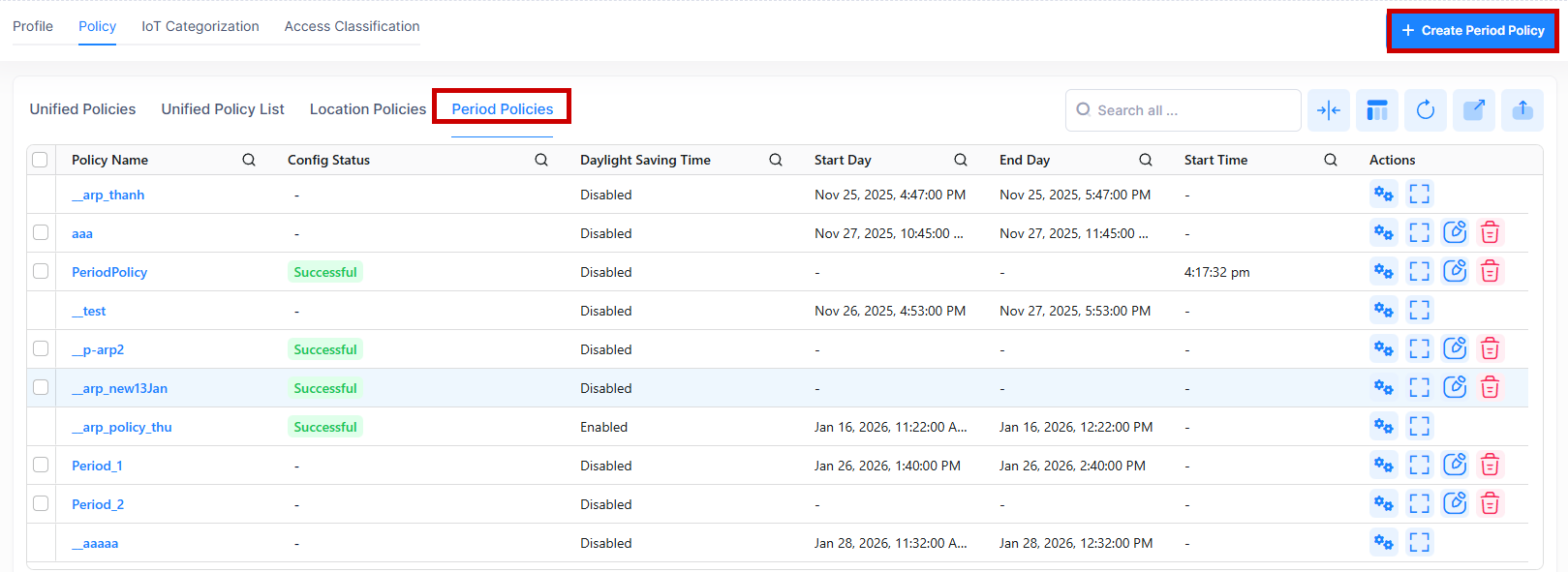
Creating a Period Policy
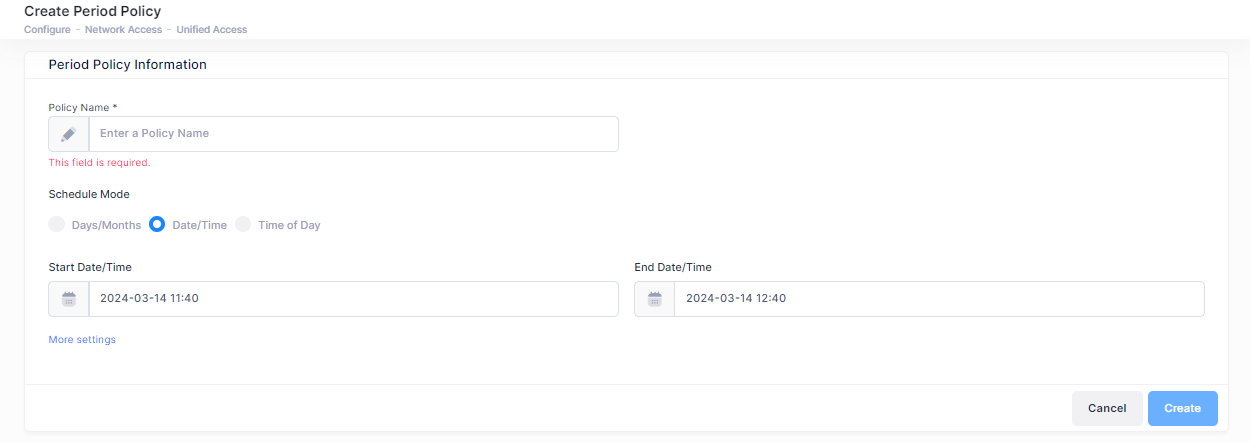
Click on Create Period Policy and complete the fields as described below. When you are finished, click on Create.
-
Policy Name - User-configured Period Policy Name.
-
Scheduled Mode - Configure the time schedule for the policy period. The time schedule determines when devices can access the network.
-
Days/Months - Select the days and months for the policy period.
-
Date/Time - Specify a start date/time and an end date/time during for the policy period.
-
Time of Day - Specify a start and end date/time and the days/months for the policy period.
-
-
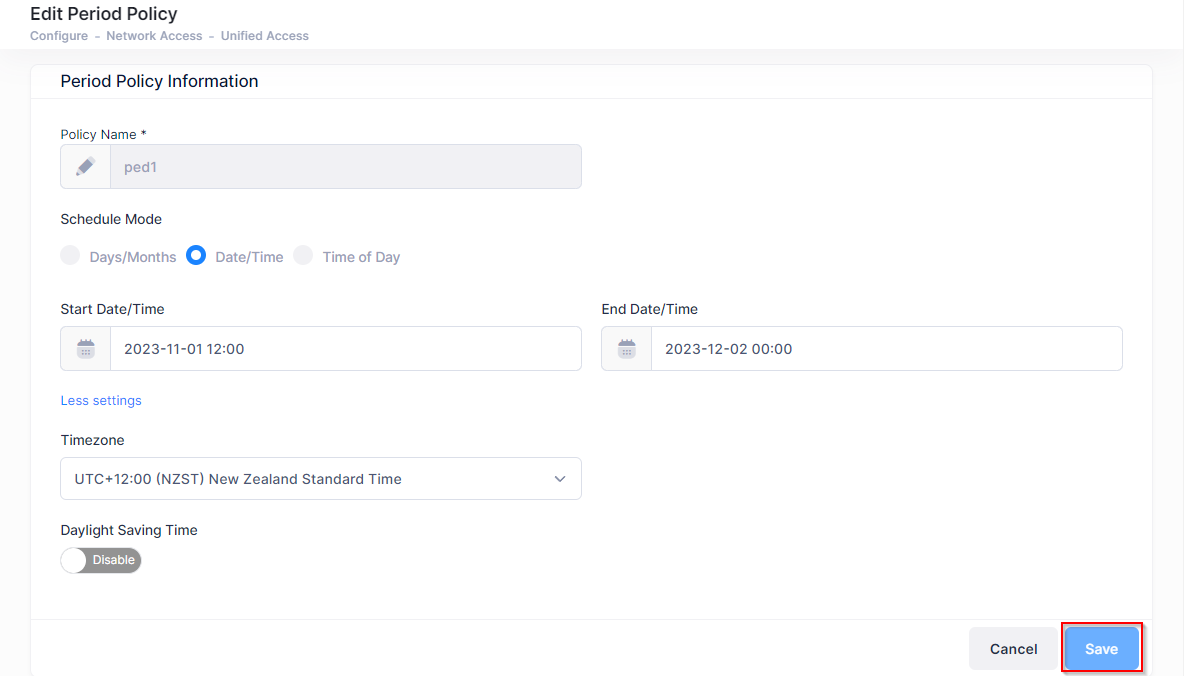
Timezone - Select the timezone in which the Period Policy is active.
-
Daylight Saving Time - Select to enable or disable daylight saving time.
Editing a Period Policy
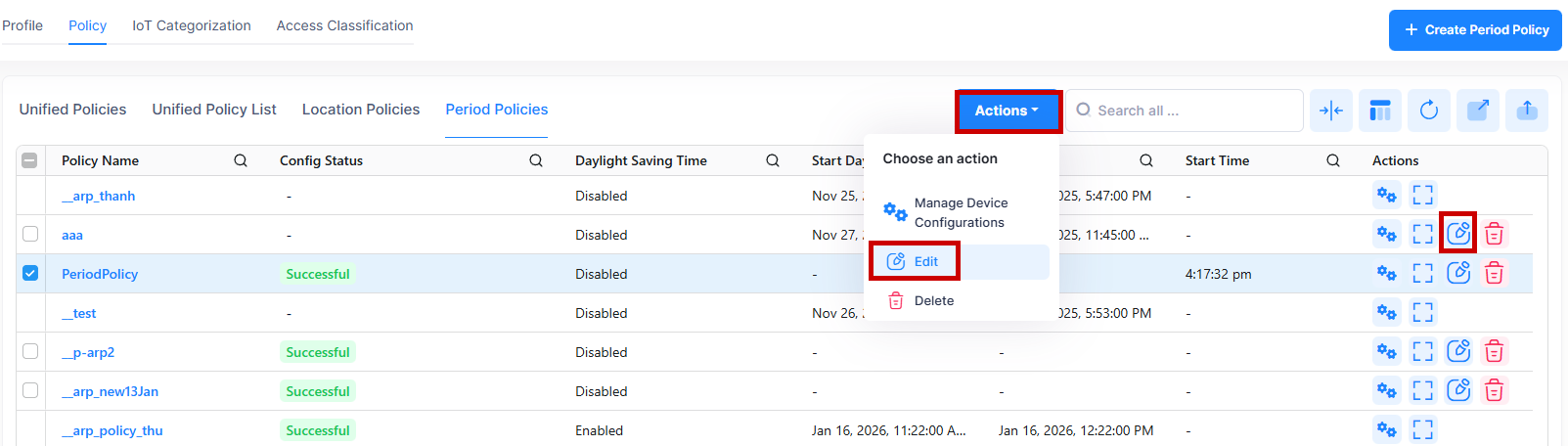
You can edit the values for an existing Policy by accessing the Edit Period Policy screen. Use one of the following methods to access the edit screen:
-
Select the Policy name to edit by clicking on the checkbox next to the Policy name, click on Actions, then select Edit from the drop-down menu.
-
Click on the pencil icon under the “Actions” column next to the Profile that you want to edit.
Edit the fields as described above then click on Save to save the changes. Note that you cannot change the Period Policy name.
Deleting a Period Policy
To delete a Policy, use one of the following methods to select the policy you want to delete:
-
Select the name to delete by clicking on the checkbox next to the profile, click on Actions, then select Delete from the drop-down menu.
-
Click on the trash can icon under the “Actions” column next to the Policy name that you want to delete.
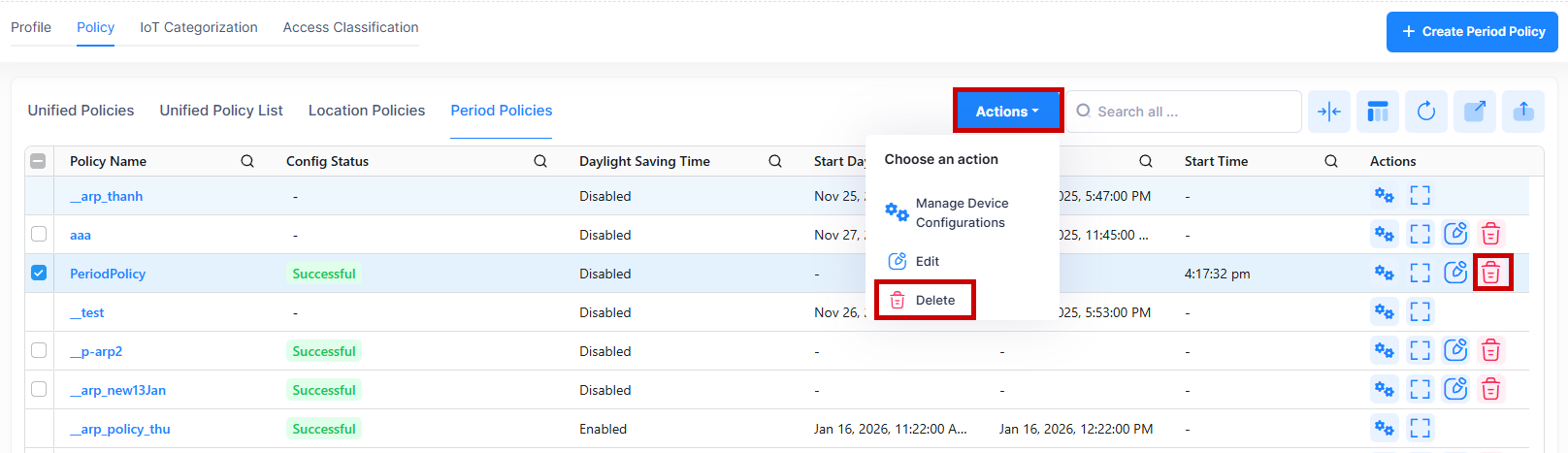
When you select the profile you want to delete, the following confirmation prompt appears:
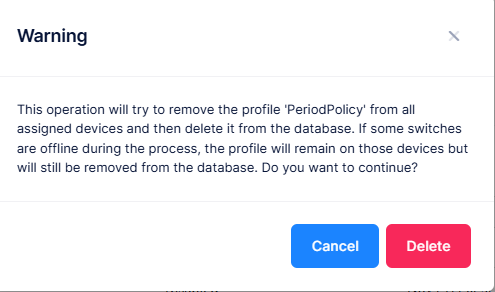
Click on Delete to confirm that you want to delete the Period Policy.
Display Additional Period Policy Information
To display additional information about a specific profile, click on the Additional Information icon under the “Actions” column. The information displayed on this screen is defined below.
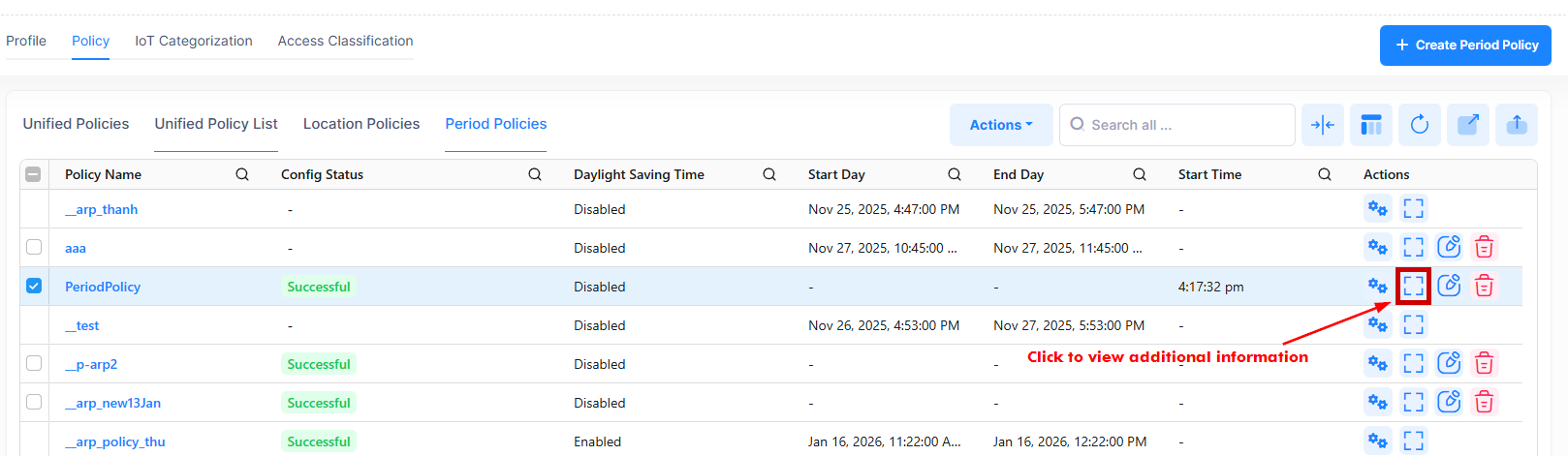
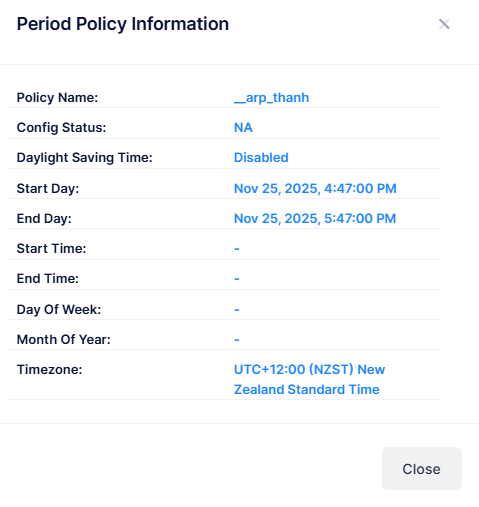
The following information is displayed for each Period Policy:
-
Policy Name - Specifies the User-configured Period Policy Name.
-
Config Status - The status of applying the profile to devices (Successful, Failed, Pending, or Partially Failed).
-
Pending - The configuration is being pushed to the devices and has still not received any response from any device.
-
Failed - The configuration failed to apply to all the selected devices. Possible reasons include a timeout while applying the configuration due to the device being unreachable or a network issue, or the configuration being invalid and rejected by the device. Check alerts to identify the specific reason.
-
Successful - The configuration is pushed to all the selected devices successfully.
-
Partially Failed - The configuration is pushed to some devices successfully, while to others it failed or remains in a pending state.
-
-
Start day - Specifies the start date when devices can access the network.
-
End day - Specifies the end date for network access by devices.
-
Start Time - Specifies the start time when devices can access the network.
-
End Time - Specifies the end time for network access by devices.
-
Day of Week - Specifies the days in a week when the devices can access the network.
-
Month of Year - Specifies the months in a year when the devices can access the network.
-
Timezone - Specifies the time zone in which the Period Policy is active.
-
Daylight Saving Time - Indicates daylight saving time is enabled or disabled.
Display and Manage Device Configuration Details
The Period Policies list shows information for the configured Period Policies. To view detailed switch configuration for a specific Profile, click the Policy Name below or select the Manage Device Configurations under the “Actions” column.
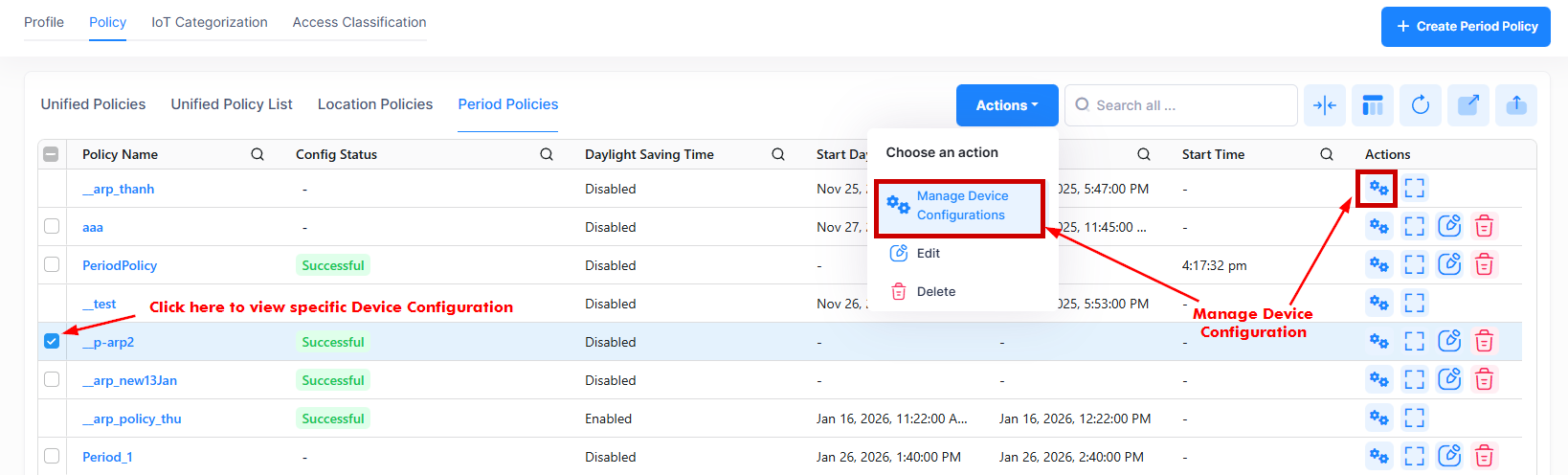
The following screen appears:
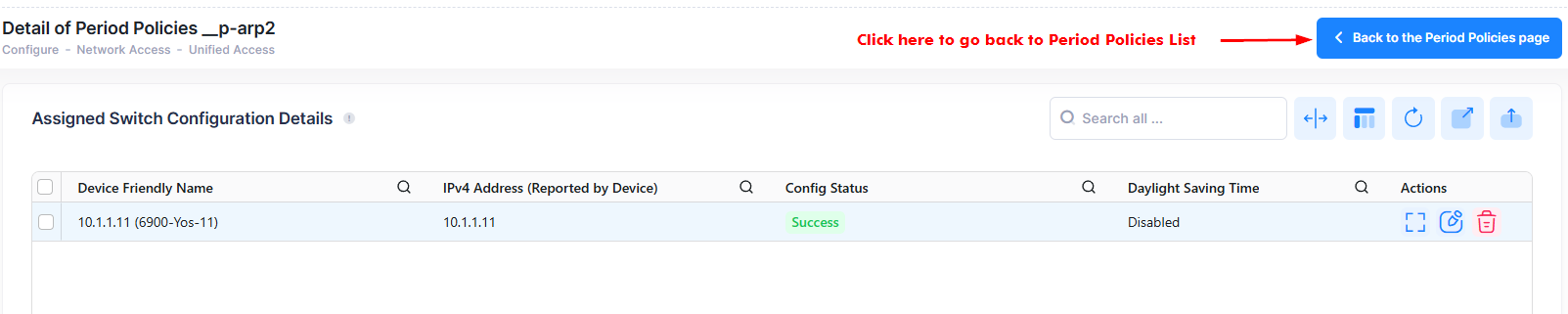
You can now view the current profile configuration for selected Switch that is assigned to a Period Policy. This screen also allows you to export, search and filter the data. You can click the back icon on the top right to navigate to the Period Policies List page.
The following Device Configuration of the selected Policy is displayed.
-
IPv4 Address - The IPv4 address of the device.
-
Device Friendly Name - The name assigned to the device is derived from the Preferred Device Naming convention specified in the user preference settings. By default, the Friendly Name is set to IP Address (System Name).
-
Config Status - The configuration status of the device. (Successful or Failed or Pending).
-
Pending - The configuration is being pushed to the device and is still not receiving a response from the device.
-
Failed - The configuration failed to apply to the device. Possible reasons include a timeout while applying the configuration due to the device being unreachable or a network issue, or the configuration being invalid and rejected by the device. Check alerts to identify the specific reason.
-
Successful - The configuration is pushed to the device successfully.
-
-
Policy Name - Specifies the User-configured Period Policy Name.
-
Start day - Specifies the start date when devices can access the network.
-
End day - Specifies the end date for network access by devices.
-
Start Time - Specifies the start time when devices can access the network.
-
End Time - Specifies the end time for network access by devices.
-
Day of Week - Specifies the days in a week when the devices can access the network.
-
Month of Year - Specifies the months in a year when the devices can access the network.
-
Timezone - Specifies the time zone in which the Period Policy is active.
-
Daylight Saving Time - Indicates daylight saving time is enabled or disabled.
Edit Period Policy Device Config
You can edit the Device configuration for the selected Period Policy. Select the policy to edit by clicking on the checkbox next to the policy name, click on Actions, then select Edit from the drop-down menu or click on the pencil icon under the “Actions” column next to the policy that you want to edit.
The below screen appears:
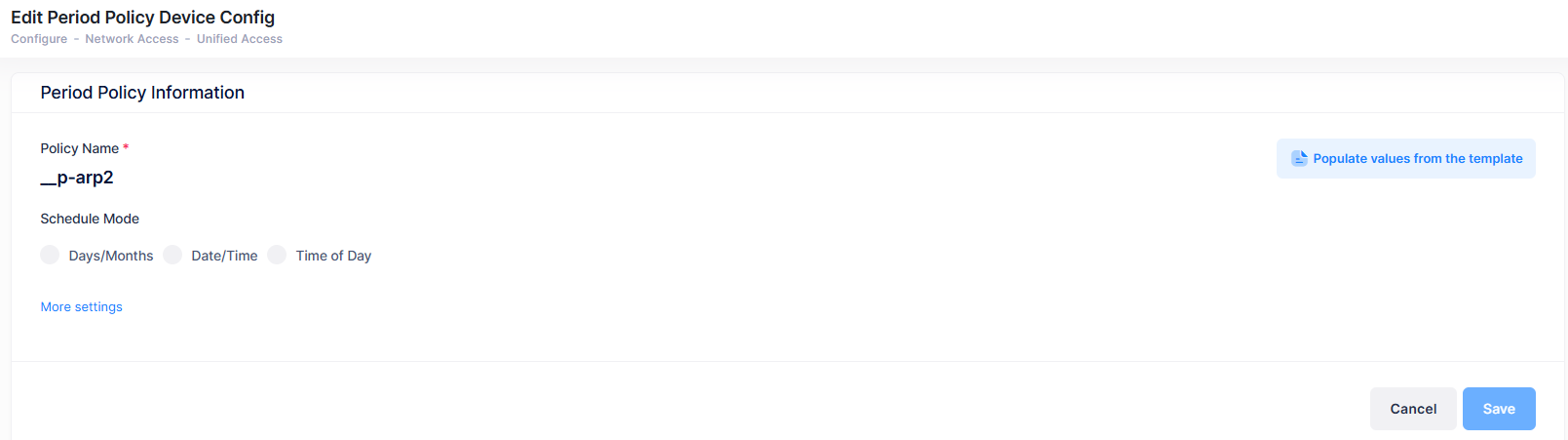
Edit the fields and click on Save.
You cannot edit the Period Policy Name.